The term deep brain stimulation — or “brain pacemaker” often surprises patients at first. It is shortly called DBS. Questions like “Are you putting a chip in my brain?”, “Does this really work?” “Would it help in my case?” comes up in almost every consultation. These questions are completely understandable. Parkinson’s disease doesn’t appear suddenly; it progresses over years with ups and downs, bringing good days and difficult days. It is ultimately a progressive condition, and unfortunately, we cannot change that yet. Medications work very well for a period, but over time their effect shortens, side effects increase, and the rhythm of the day slips out of the patient’s control. So when deep brain stimulation is recommended, it is natural for patients to pause and think.
In this article, I want to explain what DBS is, how it works, who benefits from it, and how life changes after surgery — in a clear and accessible way, based on real patient experiences I see every day in the clinic.
What Is Parkinson’s Disease? Why Do Medications Eventually Become Insufficient?
In Parkinson’s disease, cells in a very specific region of the brain that produce dopamine begin to die. Dopamine is the key chemical that ensures smooth, coordinated movement. Its deficiency is the root of all symptoms. In the early years of the disease, medications compensate for this deficiency very well; many patients feel they have “returned to life.”
But over time, things change. The effect of medication becomes shorter, and daily fluctuations become more pronounced. A day that starts well in the morning may worsen by the afternoon and improve again in the evening. These “on-off” fluctuations make daily planning difficult. Meanwhile, involuntary movements called dyskinesias may appear as a side effect of long-term medication use.
This is exactly where DBS (Deep Brain Stimulation) comes in: to stabilize these fluctuations and give patients back control over their daily rhythm.
What Is Deep Brain Stimulation (DBS) in Parkinson’s Disease?
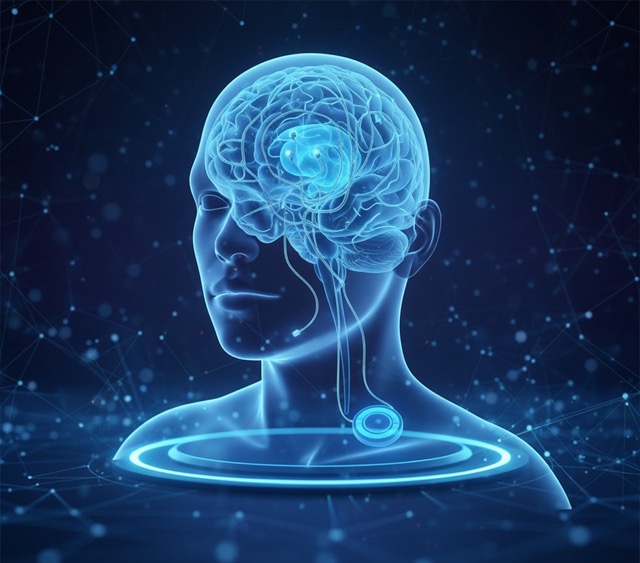
DBS is a treatment that regulates abnormal brain signals through thin electrodes placed in deep brain structures. The system has three components: the electrode in the brain, the battery unit in the chest, and the connecting cable.
There is no “chip” placed in the brain. What we actually do is rebalance the disrupted circuits using electrical stimulation. This stimulation calms the irregular signals that slow movement, increase tremor, and cause stiffness. The goal is to help the brain regain its natural rhythm — a process we call neuromodulation.
Does Parkinson’s DBS Surgery Really Work?
Short answer: Yes — in the right patient, at the right time. Often even better than expected.
Significant reduction or disappearance of tremor, relief of stiffness, smoother movements… These are outcomes we see very frequently in daily practice. One patient told me he drank soup without spilling for the first time in years. Another, who needed his spouse’s help to get out of bed every morning, said he could finally get up on his own after surgery.
The benefits of DBS (Deep Brain Stimulation) are not limited to movement. The day becomes more predictable. Medication doses decrease, side effects lessen, and patients regain the ability to plan their day.
Of course, DBS (Deep Brain Stimulation) has limits: it does not cure Parkinson’s disease, nor does it stop its progression. There is ongoing academic debate about whether it may slow progression indirectly, but this is not yet proven. What we know for certain is that DBS dramatically improves quality of life by controlling symptoms — sometimes in truly remarkable ways.
Who Is a Good Candidate for Parkinson’s DBS Surgery?
First, the diagnosis must be definite. Other conditions can mimic Parkinson’s symptoms. To make this distinction, the patient must have been followed long enough — usually at least 4–5 years — with a clinical course consistent with Parkinson’s disease.
Not every Parkinson’s patient is suitable for DBS. The best results are typically seen in patients who:
- Respond well to medication but experience shorter benefits
- Have significant dyskinesia
- Have tremor-dominant disease
- Have preserved cognitive function
The most important criteria are good medication response and intact cognition. Patients who do not benefit from medication generally do not benefit from DBS. And patients with cognitive impairment may struggle with device management, and DBS may worsen cognition in such cases.
In recent years, evidence has been growing that performing DBS earlier — once the diagnosis is certain — may significantly improve quality of life and possibly slow the functional decline. This is still an academic discussion, but for younger, active patients, earlier DBS can be a very reasonable option. As always, every patient is unique, and individualized evaluation is essential.
In our center, DBS decisions are made jointly by neurology, neurosurgery, and psychiatry. The goal is to identify the right moment for the right patient. Early referral helps avoid missing the optimal treatment window.
Is Parkinson’s DBS Surgery Risky? How Is It Performed?
DBS is one of the most precise yet safest procedures in neurosurgery. A detailed MRI is obtained before surgery, and the target is planned with millimetric accuracy. During surgery, stereotactic navigation is used, and electrodes are placed with sub-millimetric precision.
In our center, we use the awake technique — the patient is awake during electrode placement, allowing us to confirm the correct target by examining the patient during surgery. After the electrodes are placed, the final part of the procedure is done under anesthesia to implant the battery unit under the skin of the chest.
Patients usually stay in the hospital for two days. But the real process begins afterward: programming. This requires patience; each adjustment gradually improves movement and daily function. Once the optimal settings are found, patients often regain a level of mobility they have missed for years.
For a detailed day-by-day guide of what to expect during your DBS journey in Istanbul, visit our DBS Patient Journey page
How Does Life Change After DBS Surgery?
The improvement is usually gradual. As programming progresses, patients wake up more comfortably, medication schedules become more flexible, and independence in daily activities increases. The caregiving burden on families also decreases significantly.
DBS is not a “magic switch,” but with the right settings, it is a powerful tool that reorganizes a patient’s life. Many patients say, “My life finally feels back on track.”
When Should a Patient Be Evaluated for DBS?
The most common mistake is waiting too long. While saying “Let’s wait a bit more,” the disease progresses and the ideal window narrows.
Evaluation is reasonable when:
- Medication effect is becoming shorter
- On-off fluctuations disrupt daily life
- Dyskinesia is increasing
- Tremor is not controlled with medication
- The patient is young and active
Even if the result is “not yet,” this information is valuable. What matters is having the conversation at the right time.
If you would like us to evaluate whether DBS is the right option for you, our DBS Patient Journey page is a good place to start.
For Questions
If you have questions about Parkinson’s treatment or DBS, we can discuss everything in detail during your consultation.
📞 +90 216 542 6666
💬 WhatsApp: +90 531 460 7738
📧 mustafa.sakar@memorial.com.tr
📍 Memorial Göztepe Hospital, Ataşehir / Istanbul