Brain Aneurysm: A Silent Companion or a Hidden Threat?
A brain aneurysm is something I encounter quite often in my neurosurgical practice: a small bubble in the corner of an MRI taken for an entirely different reason… The patient feels nothing, continues with life as usual — yet that tiny detail on the image is an aneurysm. At that moment, the patient and I look at each other, both aware that a decision now needs to be made together.
A brain aneurysm is often silent. But being silent does not mean it is insignificant.
What Is a Brain Aneurysm?
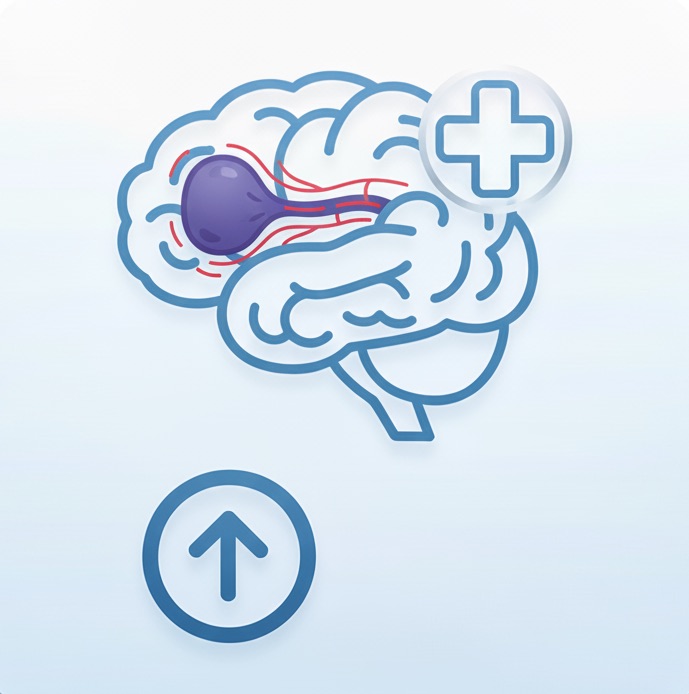
A brain aneurysm is a ballooning that forms at a weak spot in the wall of a blood vessel. The vessel wall thins, stretches, and gradually bulges outward. Most aneurysms remain small and cause no symptoms. People may live with them for years — many never even know they have one.
But some grow. And some, in the worst-case scenario, rupture.
A ruptured aneurysm causes a sudden and severe bleed into the space around the brain. We call this a subarachnoid hemorrhage. It is one of the most dangerous and dramatic emergencies in neurosurgery. Patients often describe it as:
“The worst headache of my life.”
When I hear that sentence, I know every second matters.
Who Gets Brain Aneurysms?
Aneurysms are more common than we think. They are estimated to occur in about 2% of the population.
Certain individuals have a higher risk:
- Family history of aneurysm or subarachnoid hemorrhage
- High blood pressure
- Smoking
- Genetic conditions such as polycystic kidney disease
- Female sex (especially after menopause)
If these risk factors are present and a patient describes a sudden, severe headache, one should not hesitate to suspect a ruptured aneurysm and request imaging.
Symptoms of a Brain Aneurysm
Symptoms fall into two categories.
Symptoms of a Ruptured Aneurysm
When an aneurysm ruptures, the picture is dramatic:
- Sudden, extremely severe headache
- Nausea and vomiting
- Neck stiffness
- Altered consciousness
This is an emergency. When an aneurysm bleeds, every minute counts.
Worldwide data show a grim reality: one-third of patients do not reach the hospital alive, and among those who do, nearly half are left with permanent disability. A second bleed is even more devastating. This is why rapid diagnosis, treatment, and prevention of rebleeding are critical.
Symptoms of an Unruptured Aneurysm
Most aneurysms never rupture and cause no symptoms — hence the term silent danger. However, some large aneurysms may press on surrounding structures and cause:
- Drooping eyelid
- Double vision
- Facial numbness
- Severe headache
How Is a Brain Aneurysm Diagnosed?
Today, MR angiography and CT angiography can detect aneurysms with high accuracy. The gold standard, however, remains DSA (digital subtraction angiography).
Many aneurysms are discovered incidentally during imaging performed for unrelated reasons.
If bleeding is suspected, the first test is a CT scan. When combined with CT angiography, we can determine both the presence of bleeding and the responsible aneurysm within minutes.
Treatment of Brain Aneurysms: Which Method and When?
All ruptured aneurysms must be treated — there is no debate here. The real question is which method is best.
Not all unruptured aneurysms require treatment. Small, low-risk aneurysms may be monitored with regular follow-up. But the decision is complex — size, shape, location, patient age, and overall health all matter.
1) Surgical Clipping
This is a method I frequently perform and achieve excellent results with in suitable patients. During surgery, a small metal clip is placed across the neck of the aneurysm, completely blocking blood flow into it and excluding it from circulation. The greatest advantage is that it offers a definitive and permanent solution.
2) Endovascular Treatments
Through the groin artery, coils, stents, or glue-like materials can be placed inside the aneurysm. For some aneurysms, this is an excellent option — but not for all. The main drawback is that even a completely sealed aneurysm may refill and bleed years later. Some procedures also require long-term use of strong blood thinners.
“The right question is not ‘which method is better?’ but ‘which method is best for this patient and this aneurysm?'”
My Approach to Brain Aneurysm Treatment
When a patient presents with an aneurysm, I begin by listening and performing a thorough examination. Then I review the imaging: the size, shape, vessel of origin, and anatomical details. Assessing the feasibility of surgical clipping is particularly important.
If surgery can be performed with low risk, it is often my first choice. We evaluate each case together with our interventional radiology specialist and then discuss all options, risks, and benefits with the patient. The decision is always shared.
Ruptured Aneurysm: A Race Against Time
Subarachnoid hemorrhage is one of neurosurgery’s most critical emergencies. The right intervention at the right time saves lives. When we take these patients to surgery, we know every minute is precious. With timely treatment, full recovery is possible.
Final Words on Brain Aneurysm
A brain aneurysm is often silent — but that does not mean you are helpless. With proper follow-up, accurate evaluation, and timely treatment, this condition can be managed successfully.
If you or a loved one has been diagnosed with a brain aneurysm or has concerns, you may seek an evaluation. Every case is unique — and every patient deserves an individualized approach.
Contact Assoc. Prof. Mustafa Sakar, MD
📞 +90 216 542 6666
💬 WhatsApp: +90 531 460 7738
📧 mustafa.sakar@memorial.com.tr
📍 Memorial Göztepe Hospital, Ataşehir / Istanbul